
An afternoon at Kiyomizudera and the preserved historic district around it
The Higashiyama District (東山) is one of the best preserved historic districts in Kyoto. It is a good place to experience traditional old Kyoto.

This visit can be done in half day and can be combined with other visits to Kyoto. Kiyomizudera, the starting point of this visit, is reachable by a 15 minutes bus ride from Kyoto Station with another 10 minutes walk from the bus stop. Also, can be reached by a 15 minute walk from Kiyomizu-Gojo Station on the Keihan Line.
The walk covered Kiyomizudera temple, historic streets, Kodai-ji temple, Maruyama park, Yasaka Shrine, a peek to the geisha district in Gion, and a walk along to Ponto-cho alley next to Kamagawa river. It was about a 4 km walk and it took me about 4.5 hours to cover it. This was the second part of a sightseeing day in Kyoto after visiting Fushimi Inari Taisha in the morning.
Kiyomizudera
After lunch at Kyoto Station. I headed to the bus terminal for the buses that headed to Kiyomizudera. I took bus 206 that was easy to locate at the bus terminal in front of the station.


Unlike other cities. Some of Kyoto attractions are more conveniently accessible by bus rather than by train or subway. Buses serving tourist attractions have signs in English.
Kiyomizudera is known by its wooden terrace that is about 13 meters high on a hill side next to the Otowa waterfall. Access is through a uphill street that switched from residential to commercial as I was approaching the temple grounds.

Kiyomizudera (清水寺) literally means “Pure Water Temple”. It is one of the most popular temples of Japan. It was founded in 780 AD at the site of the Otowa waterfall on the east side of Kyoto. The temple was added to the list of World Heritage Sites by UNESCO in 1994.

The temple grounds has elements of both Shinto and Buddhism. The entrance is guarded by Komainus (Lion Dogs). Some structures have the classic red color of Shinto shrines and there are also brown colored Buddhist halls.

After some stairs up. There is a beautiful three storied pagoda. Next, is the access to the Main Hall.

In front of the hall is the terrace that is held by a 13 meters (I think is higher than that) wooden structure that was assembled without nails. My friend Kazumi explained that this type of construction allows for the wood to last longer as it will not rot by the oxidization of the nails. It offers nice views of Kyoto, the forest that surrounds the hills and the temple grounds.


After passing the Main Hall is the access to Jishu Shrine (地主神社 Jishu-Jinja). The shrine is dedicated to Enmusubi no Kami (えんむすびの神), the deity of love and matchmaking.


From the Main Hall, I could see down to the base of the waterfall. There, the water is separated into three streams were visitors can drink from them by using small cups attached to to long poles. It is supposed that each stream has a different benefit and visitors should not drink from all three of them in the same visit as it is considered greedy.

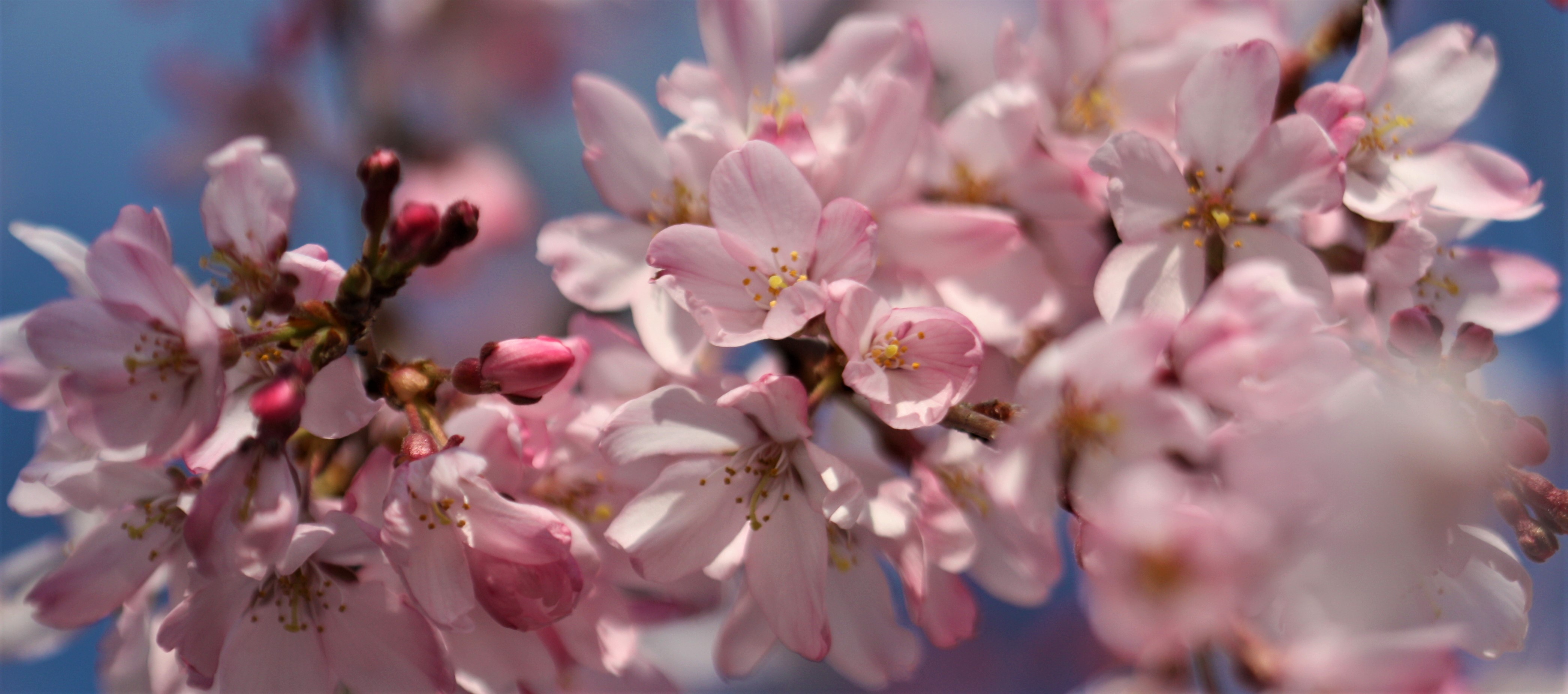
The path continues beyond the waterfall and returns to the base of it. Then, it continues by the base of the Main Hall structure. The path is surrounded by plenty of trees with some memorials. The trees were still without leaves as it was late in winter, very few Sakura (cherry tree blossoms), but I was able to see some magnolia blossoms.

Kiyomizudera is an important place to visit for cherry blossom in spring and leaf season in autumn.
After a short walk, I reached a small open space with a pond and a 11 storied stone pagoda.

After the 11 storied pagoda I was back at the entrance of Kiyomizudera.
Walking the historic streets
After completing my visit to Kiyomizudera, I headed back down the street to the Sannenzaka (三年坂) stairs. This is the starting point for the historic preserved streets.

The walk during early spring was just perfect as it was just fresh enough to wear a light jacket.

I tried a small Matcha (green tea) Bun from one of the stores.
There are plenty of houses and businesses well preserved in their traditional style. All cables are buried under the street to prevent modern poles to obstruct the view.


Just right before to a second set of stairs named Ninenzaka (二年坂), the Hokan-ji Temple pagoda, also know Yasaka Pagoda, was at view. The five storied pagoda is the last remnant of the temple. After the Ninenzaka stairs there are more beautiful preserved houses.

Kodai-ji and the Bronze Pavilion
After walking for a few minutes, I reached a street that marks one of the edges of Kodai-ji temple.

Kodai-ji (高台寺) was established in 1606 in memory of Toyotomi Hideyoshi, one of Japan’s greatest historical figures.
Kodai-ji is a beautiful place to visit. It has some rooms where you can sit and admire its zen gardens. It has the forest on the hills in the back, more gardens, ponds and a bamboo forest on your way out.


After a brief visit to Kodai-ji. I did continue walking towards Maruyama park. The street was sometimes narrow but always had something to see.

A lot of beautiful preserved constructions. Then, I reached to a spot not so well know to all visitors. Gionkaku-ji, the Bronze Pavilion.

In Kyoto, Kinkaku-ji (Golden Pavilion) and Ginkaku-ji (Silver Pavilion) are well known places to visit. My friend Kazumi explained to me that this pavilion was constructed more recently, in 1973, and was named the Bronze Pavilion because of the tower with copper patina on the roof. The official name is Daiun-in (大雲院), it was founded in 1587 AD but moved to this place in 1973. This temple is most of the time not open to the public.
Maruyama park and Yasaka Shrine
Maruyama park marks one the the ends to the historic street path. The other is the Gion district. The park is popular during the cherry blossom season. It is a spot for couples to have their engagement or wedding pictures.


After the park is Yasaka Shrine. This shrine is were the most famous festival, Gion Festival (祇園祭, Gion Matsuri), is held in the month of July.

The Gion festival originated during an epidemic as part of a purification ritual in 869 AD. And then, it was repeated every time an epidemic did occur. By the year 1000 AD, it became an annual event briefly interrupted in the late 15th century.

After the shrine I suddenly was back at heavy transited street. It was like a switch from the peaceful atmosphere of the temples and shrines to the noise and movement of the busy street. After a couple of blocks I reached Hanami-koji street.
Gion geisha district
Hanami-koji street is known for the Geisha entertainment establishments and is also part of the preserved historical streets of Kyoto. This street was calm at the time I was visiting. As it usually gets more living in the late afternoon and evening when customers attend the restaurants and tea houses.

It is possible to spot a Maiko or Geiko occasionally, I was advised to do not to take direct pictures of them as it is considered rude. The only way to take a picture is if they are part of a casual or random photograph.

After the visit to hanami-koji I headed to Shijo Bridge (四条大橋) near Kyoto-Kawaramachi Station. Past the river is the famous alley known as Ponto-cho.


Ponto-cho alley
Just after crossing the river is Ponto-cho (先斗町). It is a narrow alley one block from the river that runs from Shijo street to Sanjo street. It is filled with plenty of dinning options from inexpensive yakitori to high end cuisine. It is usually busy after 5:00 PM when most business start to open. It has that nostalgic scenery of the old Japanese alleys that sometimes are depicted in Japanese dramas or anime.

The exact origin of the word Ponto-cho is unknow. However, it is believed that it derives from English word “point” or Portuguese word “pont” as the area developed west of the Kamogawa river at the point of the sandbar.


After reaching the end of Ponto-cho, I crossed the river back to the east side to access Sanjo-Keihan subway station. I used the subway to get back Kyoto Station. Then, from Kyoto Station I boarded a Shinkansen to Shin-Osaka station.


Back at Osaka, I was in the mood for a refreshment. So I went to have a beer with my friend Kazumi at うみねこ (Umi Neko) our favorite spot near Namba. We had a good chat about the day with some friends.


Leave a Reply